

JUNE – SEPTEMBER 2026
The Museo Poldi Pezzoli and the World Monuments Fund join forces for an extraordinary restoration. An international partnership to restore the museum’s centrepiece to its original form. The recovery of the Golden Room also marks the launch of World Monuments Fund Italia.
There is a plasterboard ceiling hiding something.
Beneath it, untouched since the mid-nineteenth century, the marble arch of the original Serlian window — designed by Lodovico Pogliaghi with bronze elements by Giuseppe Speluzzi — is waiting to be brought back to light.
This is the discovery at the heart of the restoration project for the Golden Room, the principal hall of the Museo Poldi Pezzoli, home to the finest Renaissance masterpieces in the collection. A project the museum is carrying out with the support of the World Monuments Fund, one of the world’s leading institutions for cultural heritage conservation, active in Italy since 1966 with over one hundred completed projects.
A room to be returned
to history
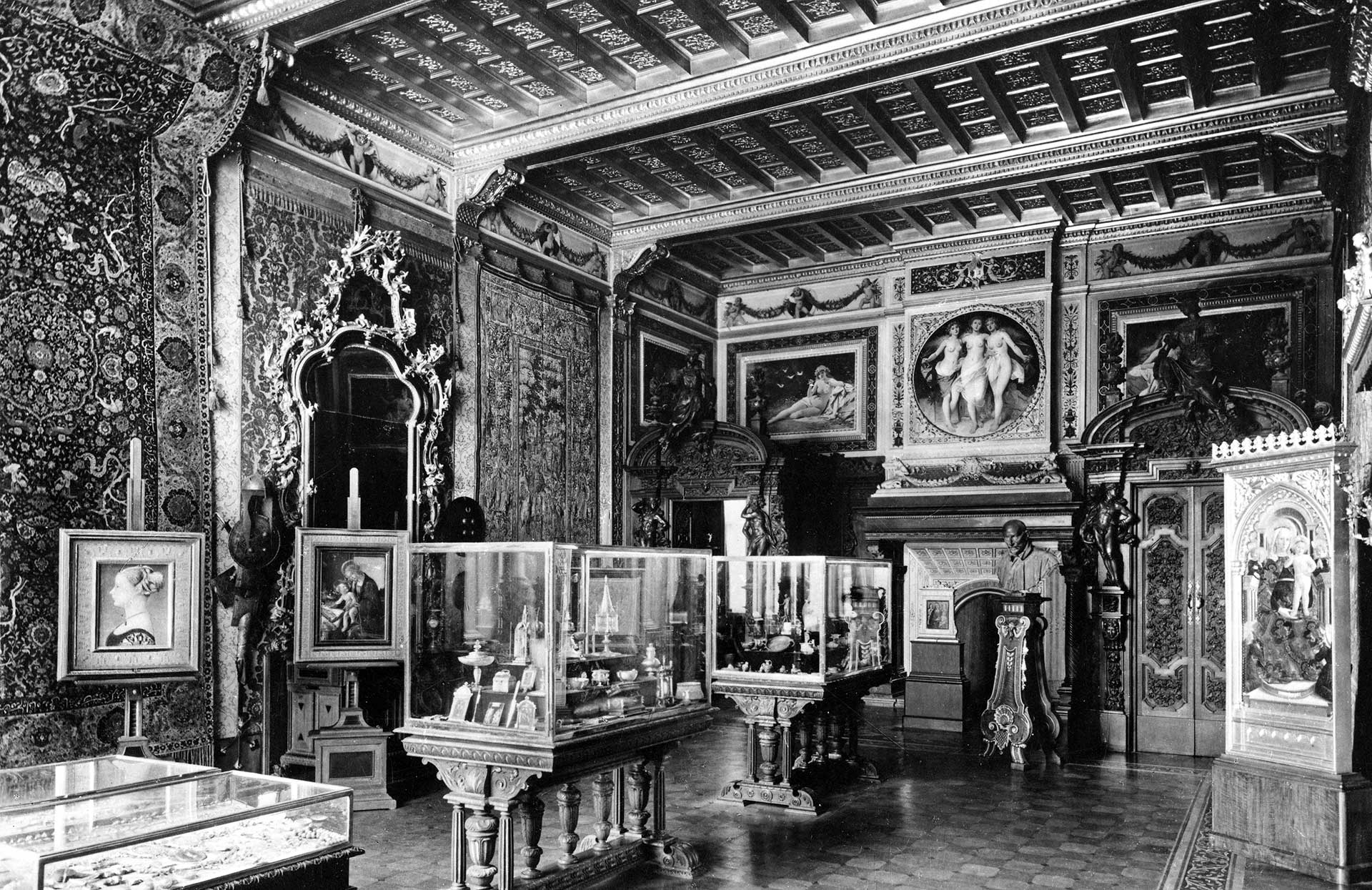
Conceived in the mid-nineteenth century as a unified architectural and artistic environment, the Golden Room featured a gilded coffered ceiling, walls hung with yellow silk damask, a monumental Serlian window overlooking the garden, and paintings displayed on period easels. A pioneering museographic invention that would go on to influence institutions such as the Isabella Stewart Gardner Museum in Boston and the Frick Collection in New York.
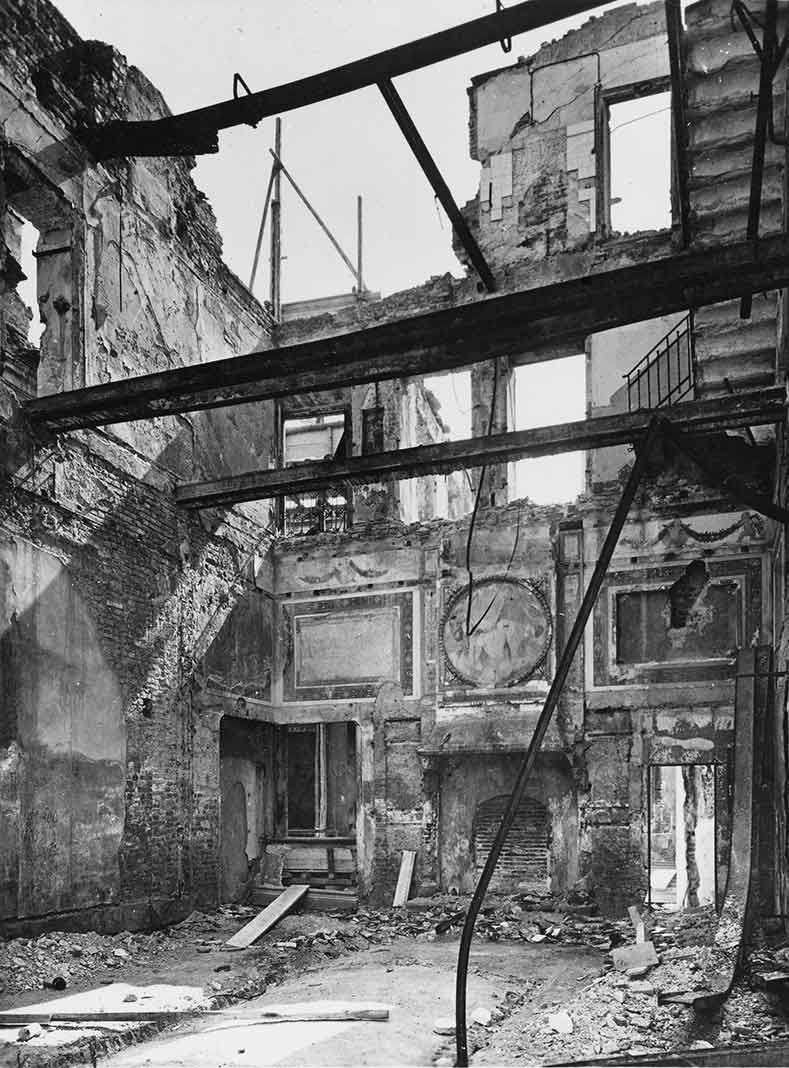
The bombing of August 1943 destroyed the ceiling, wall coverings and decorative apparatus. Post-war interventions further fragmented the space, concealing the surviving elements. Since 1951 the room has undergone further alterations — most significantly the plasterboard ceiling of the 1970s, which still hides the original Serlian window today.
The project
Recent investigations have revealed that the marble arch of the Serlian window has remained intact beneath the post-war modifications. The project, designed by architect Piero Guicciardini, involves the removal of the 1974 ceiling and the restoration of the room’s original spatial proportions, returning the Serlian window’s marble and bronze decorations to view. For the first time since the Second World War, the Renaissance ceiling panels and the historic tapestries will be reunited in their original positions.
The educational programme accompanying the restoration will allow visitors to follow the full history of the Golden Room: from its nineteenth-century creation, through its wartime destruction, to its post-war reinterpretation.
World Monuments Fund Italia
The project coincides with the launch of World Monuments Fund Italia, the new Italian chapter of the organisation founded in New York in 1965. A presence deeply rooted in the historic bond between the WMF and Italy: it was Italy itself — first the Tower of Pisa, then the Venice floods of 1966 — that inspired the organisation’s founding and defined its global mission.
“Now more than ever, we must affirm that the protection of cultural heritage is a shared responsibility. We are proud that the new chapter of the World Monuments Fund begins right here, in the Golden Room, where the Renaissance masterpieces of the Museo Poldi Pezzoli are kept.”
Alessandra Quarto, Director, Museo Poldi Pezzoli
MOSTRA
22 ottobre 2026 — 25 gennaio 2027
Un Tiziano
per Milano
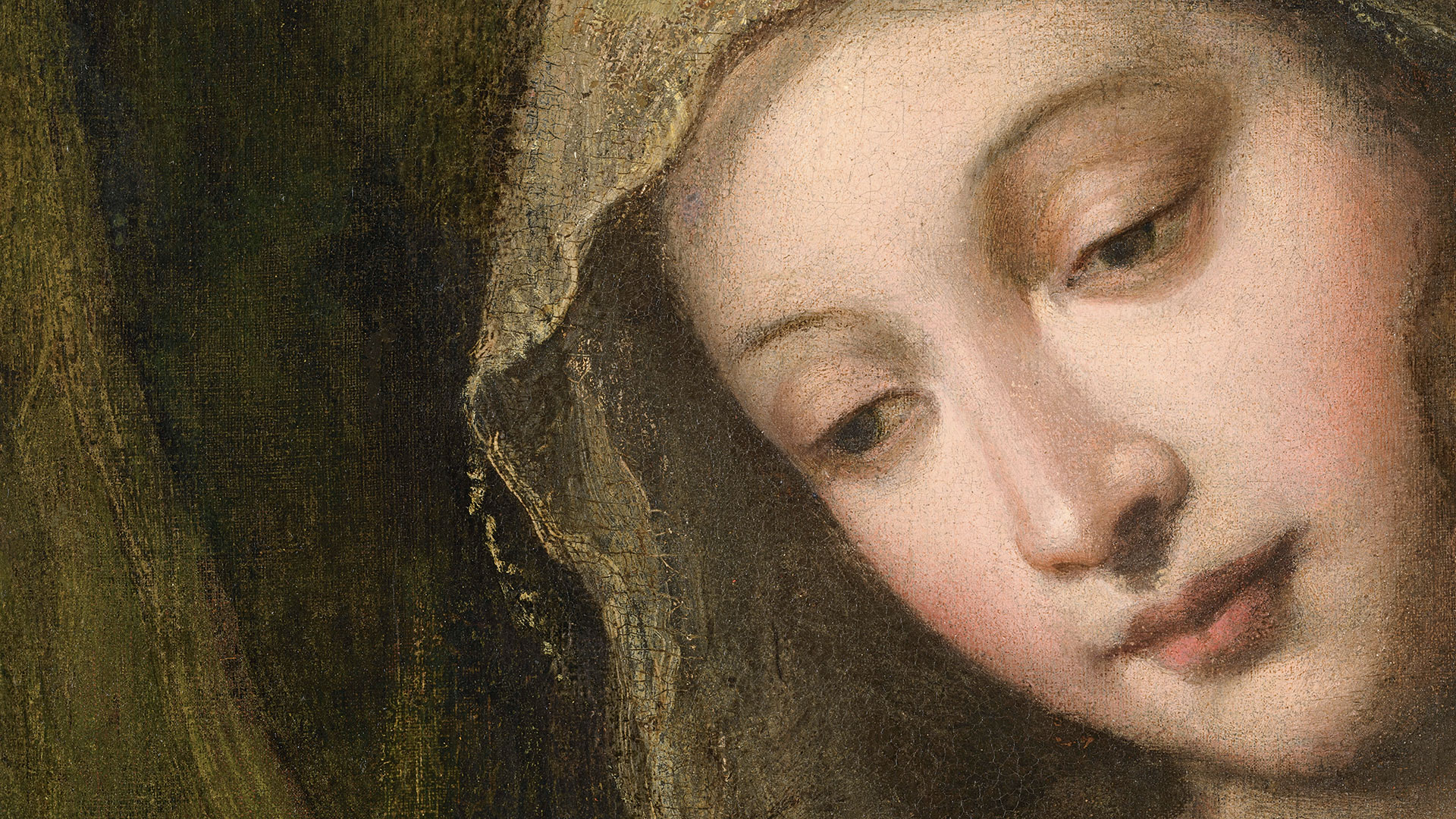
Il Museo Poldi Pezzoli presenta “Un Tiziano per Milano”, una mostra dossier che nasce dall’arrivo nelle collezioni del Museo di un’importante opera del maestro e, da qui, ricostruisce un capitolo sorprendente del suo rapporto con la città.
museo poldi pezzoli
Museo Poldi Pezzoli
Nel centro di Milano, a pochi passi dal Duomo e dal Teatro alla Scala, il museo Poldi Pezzoli vi aspetta! Inaugurato nel 1881, era la casa del nobile milanese Gian Giacomo Poldi Pezzoli (1822-1879). Appassionato collezionista d’arte, vi aveva raccolto non solo dipinti, ma anche sculture, tappeti, pizzi, armi e armature, oreficerie, orologi, porcellane e vetri.
EDUCAZIONE
Servizi educativi
Il Museo ha avviato attività didattiche dal 1974 attraverso visite guidate, laboratori, percorsi specifici e pubblicazioni studiati per ogni tipo di pubblico, dalle scuole di ogni ordine e grado, agli adulti.
EDUCAZIONE
Proposte e attività
I Servizi Educativi del Museo Poldi Pezzoli conducono i visitatori di ogni età alla scoperta delle collezioni con percorsi e attività studiati in base alle specifiche esigenze di ogni categoria di pubblico.